













You probably spent a lot of mornings as a kid eating your gummy vitamin supplements to support your bones and grow up big, strong, and healthy. But vitamins aren’t just important when you’re a kid — they might be even more important for older adults to help keep cognitive decline and brain atrophy at bay.
Among the many different vitamins you should be taking each day, the different vitamin Bs are essential for brain health. The problem is that there are many different types of B vitamins, so it can be tough to know exactly which ones to get.
Here is everything you need to know about B vitamins to support proper brain functioning.
What Are the B Vitamins?
B vitamins support a whole bunch of different enzymes in your body to do what they need to do to support holistic well-being. There are eight different types of B vitamins, each with different roles and functions in the body.
B1 (Thiamin)
Vitamin B1 plays a vital role in the growth and development of cells throughout the body. A B1 deficiency can lead to a decline in cognitive function or heart problems since these organs require a constant supply of energy.
The liver stores a very small amount of thiamin, so it is important to get enough of it from food. Whole grains, meats, fish, and fortified cereals are great sources of B1.
B2 (Riboflavin)
Vitamin B2 is a key coenzyme that can help cells grow, produce energy, and break down fats, steroids, and medications. Vitamin B2 can also help support a healthy nervous system.
Riboflavin is typically used by the body immediately, with any excess being excreted through your urine.
Some animal studies have found that brain and heart disorders can develop from a long-term deficiency of vitamin B2. To keep your brain in good shape, eat leafy greens, nuts, and meats.
B3 (Niacin)
Vitamin B3 is a vital water-soluble vitamin that converts nutrients into energy, creates cholesterol, supports brain cell function, and helps repair DNA. It can even have antioxidant effects to fight back against skin aging.
A niacin deficiency is rare because it’s found in many foods, including brown rice, red meats, poultry, bananas, and more.
B5 (Pantothenic Acid)
Vitamin B5 makes coenzyme A, which helps to break down fatty acids and help you perform other metabolic functions. In other words, it can help use fat in your body for energy from the foods you eat.
Some research has suggested that B5 can reduce cholesterol levels in people with dyslipidemia, where individuals have an abnormally high level of “bad” cholesterol in the blood.
You can get more vitamin B5 from pretty much any plant and animal food because this vitamin is found in all living cells.
B6 (Pyridoxine)
Vitamin B6 helps many enzymes in the body function as they should. From breaking down proteins, carbs, and fats to supporting immune function and brain health, this vitamin helps support the body as a whole.
You can get more vitamin B6 from tuna, salmon, chickpeas, and some dark leafy green vegetables.
B7 (Biotin)
Vitamin B7 assists in the breakdown of fats, carbs, and protein, but it also helps regulate cell signals and gene activity. You can get more vitamin B7 from cooked eggs, pork, avocados, and sweet potatoes.
B9 (Folate)
Vitamin B9 plays a key role in promoting healthy homocysteine levels, an amino acid that can be a predictor of heart disease in high amounts.
This vitamin also helps in the production of healthy red blood cells and is an essential component of prenatal vitamins to help support a healthy mother and child.
In the brain, folate can help promote overall neurological health.
Folate is the natural form of vitamin B9 found in food sources like beans, peanuts, and sunflower seeds, fresh fruits, whole grains, and dark leafy greens.
Vitamin supplementation is a great way to get the recommended amounts of this important nutrient daily since the synthetic form of folate, folic acid, is actually better absorbed into the body than the naturally occurring form found in foods.
B12 (Cobalamin)
Vitamin B12 is an essential component of a healthy brain and nervous system thanks to its role in supporting healthy neurons (aka brain cells). It also works to help process protein in the body.
Aside from issues with cognitive health and mental health, a B12 deficiency can also lead to muscle weakness, digestive problems, and metabolic issues.
Thankfully, a B12 deficiency is relatively uncommon in the general population because it’s found in a variety of food sources including eggs, milk, cheese, beef, liver, chicken, and fish. That said, if you follow a vegan or vegetarian diet, or have sensitivities to dairy, you may want to consider a B12 supplement to get your daily recommended value of B12.
Which B Vitamins Are Most Important for Brain Health?
While certain B vitamins like B6 and B12 are more directly beneficial for the neurons in your brain and nervous system, every single B vitamin is important to help support cognitive health holistically and keep your gears spinning without a problem.
Since the main purpose of most B vitamins is to convert nutrients in food into energy for your body to use, this is one of the main reasons why it is so beneficial to your cognitive health.
Without a steady supply of nutrients, your body is at a higher risk of neurodegenerative diseases like Alzheimer’s, dementia, memory loss, or other forms of cognitive decline.
New research has found that folate, or vitamin B9, might be one of the most important vitamins to help enhance your brain health. It creates DNA and RNA while also forming new neurotransmitters to kickstart cell signals in the brain to keep you sharp. It has also been known to boost dopamine and serotonin levels to ward off symptoms related to mood.
How Much of Each B Vitamin Should You Take for Brain Health?
The amount of B vitamin you need daily depends on the specific type of B vitamin itself, but in general, getting the recommended value of B6, B9, and B12 in particular can help support brain health.
Recommendations from the National Institutes of Health dictate the following for adults:
- B1: 1.1 to 1.2 mg
- B2: 1.1 to 1.3 mg
- B3: 14 to 16 mg NE
- B5: 5 mg
- B6: 1.3 mg
- B7: 30 mcg
- B9: 400 DFE
- B12: 2.4 mcg
All of the B vitamins are water-soluble, meaning your body doesn’t store excess amounts for later and just gets rid of the excess through urine; this is why it’s important to get your daily dose of B vitamins through food and/or supplements.
Vitamin B6 Deficiency Symptoms
Vitamin B6 is a vital nutrient that helps your body process the food you eat, which fuels your energy levels. Vitamin B6 also supports your nervous system and may act as an antioxidant. A deficiency in vitamin B6 can not only affect your energy levels, but can also affect your whole body and overall mood.
Symptoms of a vitamin B6 deficiency can include:
- Fatigue
- Depressed mood
- Feelings of anxiety
- Tingling in your hands and feet
Vitamin B9 Deficiency Symptoms
A deficiency in folate can affect your red blood cells and prevent them from functioning properly. Not having enough folate can also lead to a lack of red blood cells, which can cause cognitive effects like mood disorders, decreased cognitive function, and neurodegenerative diseases.
Some symptoms of a vitamin B9 deficiency can include:
- Shortness of breath
- Memory loss
- Trouble concentrating
- Lack of energy
Vitamin B12 Deficiency Symptoms
Not getting enough vitamin B12 can lead to abnormalities in your red blood cells or hemoglobin, which can seriously affect cognitive health and functioning since it risks the brain not being able to get the oxygen and nutrients it needs.
A B12 deficiency can present as several symptoms, including:
- Fatigue, or lack of energy
- Tingling and numbness in the extremities
- Memory trouble and a decline in cognitive performance
- Balance issues
In Conclusion
The eight B vitamins each play important roles for the body overall. From immune system support to brain clarity, each one of these nutrients is essential for holistic wellness. You can get more vitamin B from supplements, animal products, and many different vegetables (leafy greens pack the biggest punch!).
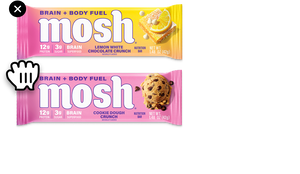
We’re fans of B12, ourselves, and have included it in our brain and body-fueling protein bar, the MOSH bar. Made with other brain-supporting nutrients like omega-3, vitamin D, ashwagandha, lion’s mane, and more, the MOSH bar is made for your brain to help keep you fit, fueled, and feeling good.
Ready for a protein-packed brain boost? Order your MOSH trial pack here.
Looking for more info on how to support your wellness? Explore the MOSH blog here.
Sources:
Thiamin (Vitamin B1) | The Nutrition Source | Harvard T.H. Chan School of Public Health
Riboflavin – Vitamin B2 | The Nutrition Source | Harvard T.H. Chan School of Public Health
B is for Brain Health | Healthy Brains by Cleveland Clinic.
Emerging roles for folate and related B-vitamins in brain health across the lifecycle | NCBI