







The word “fat” is often viewed as a curse word for anyone looking to lose weight. Every aisle in the grocery store is riddled with products labeled as “diet,” “low fat,” “reduced fat,” or “fat-free.”
The idea is that anyone on a diet will surely choose that product over the competition. The problem is that these products aren’t as healthy for you as you might think.
The truth is that your body needs fat to function properly. Fat, along with protein and carbohydrates, is considered a macronutrient.
That means that you don’t just need fat in your diet to be healthy; you need more if it than you might expect. The exact amount of fat will vary for each person, but you should get about 35 percent of your daily calories from fat.
The important thing to remember is that not all types of fat are equal. It’s not just about getting enough fat each day; it’s getting the right kind of fat. One of the easiest ways to achieve this goal is to follow the Mediterranean diet.
However, once you learn a little about fats, you can branch out and start including additional foods.
Which Fats Are Healthy?
Fat is complicated, and there are a lot of mischaracterizations about it. The easiest way to think about it is to consider fat on a sliding scale of health.
-
Unsaturated fats (polyunsaturated and monounsaturated fats) are the healthiest fats. Trying to get most of your daily fat requirements from unsaturated fats is a good way to achieve your goals.
-
Saturated fats are somewhat healthy but can result in health complications. It is important to get some saturated fat each day, but only in moderation.
- Trans fats are the least healthy fats as they offer virtually no nutritional value. It is smart to eliminate trans fats from your diet or at least limit them to special occasions.
How Does Fat Affect the Brain?
You probably picture your brain as a lean, mean, calculating machine — full of blood, neurons, and various chemicals that help determine the actions of the body. While these things are true, the brain is the fattiest organ in the body, with roughly 60 percent fat.
Saturated Fat
The difficult part when it comes to fats and the brain is that it needs various fats to function properly. For instance, saturated fat is a fundamental part of brain cells and overall brain health and plays a crucial role when making memories.
Saturated fats can also raise low-density lipoproteins (LDL) cholesterol levels in the blood. Cholesterol is vital for helping neurons communicate with one another and create an interconnected network of memory and learning. It also helps your body synthesize vitamin D, essential for growing, developing, and repairing neurons.
The problem is that too much LDL can contribute to various health complications. Elevated LDL can lead to a buildup of plaque in your arteries, increasing the risk of clogged arteries, high blood pressure, heart disease, stroke, and heart attack.
Fortunately, you can help to limit the amount of LDL in your blood by eating more healthy fats.
Unsaturated Fats
Unsaturated fats (especially polyunsaturated fats) may help the liver convert fat into ketones instead of LDL triglycerides. Doing so can help the brain function more efficiently, as ketones can be used as a backup energy source for the brain.
Burning ketones for energy instead of carbohydrates is one of the fundamental principles of the keto diet. The two most beneficial types of unsaturated fat are omega-3 and omega-6 fatty acids.
Omega fatty acids are important because they can increase your high-density lipoprotein (HDL), often referred to as “good” cholesterol. Not only can HDL help to replicate many of the roles that “bad” cholesterol plays in your brain, but it can also work to lower your LDL levels.
Keeping your LDL levels in the optimal range is essential for avoiding some potential complications listed above while allowing your brain to function properly.
DHA
The last bit of information worth knowing is that not all omega fatty acids are the same. For the brain, the omega-3 known as docosahexaenoic acid (DHA) is especially beneficial.
It’s essential for the growth and functional development of the brain in infants and plays a crucial role in the maintenance of brain function in adults. DHA is involved with memory, speaking, motor skills, solving math equations, and a long list of other essential brain functions.
If you want to increase your healthy dietary fat, you can start with DHA. Your body can convert another omega-3 fatty acid called eicosapentaenoic acid (EPA) into DHA.
However, it’s not as efficient as pure DHA, so you should go straight to the source for this one. Your diet is a great way to get more of these healthy fats (and the other types).
What Foods Have the Most Healthy Fats?
You’ll need a mixture of both “good” and “bad” cholesterol for your brain to function properly. Remember that you should aim for about 35 percent of your daily calories to come from fat. Limiting saturated fat intake to about 10 percent of your daily calories is smart. That means you can get about 25 percent of your daily calories from unsaturated fats.
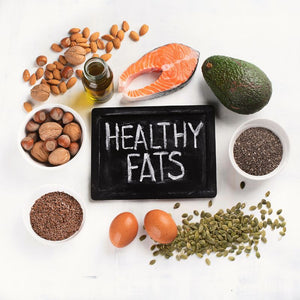
These are a few foods with the highest concentration of healthy fats (specifically the omega-3 fatty acid DHA): Oily Fish
Fish are easily the best source of omega-3 fatty acids. Pretty much any type of fish will give you an excellent supply of omega-3, but fatty fish are especially loaded with it. That’s why cod liver oil is a popular supplement for people looking to lower their cholesterol.
You can incorporate oily fish like salmon, mackerel, tuna, herring, and sardines into your diet more often. For best results, aim for at least two meals a week for a total of eight to 12 ounces.
Avocado
Avocados are something of an anomaly in the world of fruit. Most fruits are very low in fat and high in carbohydrates. Avocados, on the other hand, are very high in fat and low in carbohydrates. That’s excellent news for anyone looking to increase their fat intake without increasing their cholesterol or carbs.
What’s even better is these fats are primarily monounsaturated, which is highly beneficial for promoting healthier blood flow. An improved flow means a more efficient and steady supply of oxygen to your brain, which may improve overall function. Aim for about ½ of an avocado into your daily diet.
Vegetable and Seed Oils
Using vegetable oils as a substitute for butter or lard is an excellent way to reduce your saturated fat intake. The problem is that not all vegetable oils are equally healthy for you. Try to stick to canola, corn, peanut, coconut oil, flaxseed, sunflower, soybean, safflower, or olive oil whenever possible.
Furthermore, you should be looking for virgin or extra-virgin variations of oils. These oils are extracted without using heat or solvents and retain way more of their nutritional value as a result. Not only that, but they’re much better for your gut microbiome too.
Despite these benefits, you don’t want to go overboard with the oil. Try to keep it between five and seven teaspoons a day at most (which is actually fairly close to what you’ll use if you use these oils to cook your meals).
Eat More Healthy Fats To Give Your Brain a Boost
Eating less fat is often the first step of a diet designed to lose weight. Instead of eliminating all fat from your diet, you can focus on replacing it with healthy fats.
Your body and brain need a decent amount of fat to function properly. Eating no fat isn’t healthy, even if you end up shedding a few pounds.
Specifically, focus on increasing your omega-3 and omega-6 fatty acids. These unsaturated fats can help limit the effects of saturated fats while helping your brain operate more efficiently.
Oily fish, avocados, and vegetable oils are an excellent start. You can also enjoy a variety of nuts, seeds, beans, and eggs. Just remember to keep the calorie count from these fats to 35 percent of your daily intake or less.
With that, go enjoy that sushi or avocado toast you’ve been craving — your brain will thank you for it!
Looking for more helpful articles like this one? Explore MOSH’s brain wellness blog here.
Sources:
Healthy Cooking Oils | American Heart Association
Are Avocados High in Fat? | Heart Matters Magazine | BHF
Fish: Friend or Foe? | The Nutrition Source | Harvard School of Public Health
Fish and Omega-3 Fatty Acids | American Heart Association
Fat Facts, The Right Amount For A Healthy Diet | Penn State University
Essential Fatty Acids | Linus Pauling Institute
Health Benefits of Docosahexaenoic Acid (DHA) | NCBI Bookshelf
HDL Cholesterol: How To Boost Your ‘Good’ Cholesterol | Mayo Clinic
Why Do Polyunsaturated Fatty Acids Lower Serum Cholesterol? | NCBI Bookshelf
LDL Cholesterol: What It Is & How to Lower It | Cleveland Clinic
Saturated Fatty Acid Levels Increase When Making Memories | Science Daily
Fats and Cholesterol | The Nutrition Source | Harvard School of Public Health
What Are Macronutrients | Heart Matters Magazine | BHF
Don't Be Fooled by Low-Fat Foods | Houston Methodist On Health