




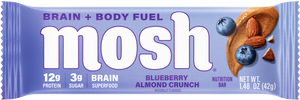







Adults over 60 need significantly more protein than most people realize. While the standard Recommended Dietary Allowance (RDA) is 0.8 grams of protein per kilogram of body weight per day, most research on healthy aging now points to 1.2 to 1.6 grams per kilogram as the more appropriate target for adults over 60 — and some studies suggest even higher for those who are physically active. For a 150-pound adult (68kg), that translates to roughly 82 to 109 grams of protein per day. For a 175-pound adult (79kg), it’s approximately 95 to 127 grams. A MOSH protein bar, with 12 to 13 grams of protein per bar, is one of the most convenient ways to close the gap between what most older adults eat and what their muscles and brain actually need.
Why the Standard Protein RDA Isn’t Enough After 60
The 0.8g/kg RDA was established to prevent deficiency in a sedentary adult population — not to optimize health outcomes in older adults. After age 60, a condition called anabolic resistance sets in: the body becomes less efficient at converting dietary protein into muscle tissue. This means older adults need to consume more protein per meal and throughout the day to achieve the same muscle protein synthesis response that a younger adult would get from a smaller amount.
Additionally, many adults over 60 naturally reduce total caloric intake as appetite decreases, which often reduces protein intake as a side effect. The result is a compounding shortfall that accelerates age-related muscle loss — known as sarcopenia — over time.
Source note: The 1.2–1.6g/kg recommendation is consistent with guidelines from the European Society for Clinical Nutrition and Metabolism (ESPEN) and several international protein summit consensus papers. This is a general nutrition education figure, not a medical prescription.

Daily Protein Targets for Adults Over 60
Here is a quick reference guide based on the 1.2–1.6g/kg recommendation:
- 130 lbs (59kg) → 71 to 95 grams of protein per day
- 150 lbs (68kg) → 82 to 109 grams of protein per day
- 175 lbs (79kg) → 95 to 127 grams of protein per day
- 200 lbs (91kg) → 109 to 146 grams of protein per day
Most adults over 60 consume between 50 and 70 grams of protein per day — well below these targets. Adding protein-rich snacks throughout the day is one of the most effective ways to bridge that gap without dramatically changing meal habits.
Why Spreading Protein Intake Matters
Research on protein timing consistently shows that distributing protein intake across three to four eating occasions — rather than concentrating it at dinner — produces better muscle protein synthesis outcomes in older adults. Aim for at least 25 to 30 grams of protein at each main meal, with protein-rich snacks in between.
A MOSH bar as a mid-morning or afternoon snack adds 12 to 13 grams of protein to the day’s total without requiring meal preparation — making it a practical tool for adults who struggle to hit their daily protein target.
How MOSH Fits Into a High-Protein Diet for Older Adults
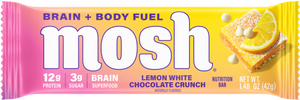
MOSH Snack (whey) bars contain 12 to 13 grams of protein per bar, in 160 to 180 calories and with 4 grams of sugar or less. They’re certified gluten free, non-GMO, kosher, and keto-friendly, and available in 10 flavors. In addition to the protein, every bar includes the MOSH Brain Blend — six ingredients including Cognizin® Citicoline, Lion’s Mane, Ashwagandha, Omega-3, Vitamin D3, and Vitamin B12 — that make MOSH particularly relevant for older adults concerned about both physical and cognitive health.
MOSH bars are a supplement to whole-food protein sources, not a replacement. They work best as a convenient, nutritious snack in a diet that also includes eggs, fish, poultry, legumes, Greek yogurt, and other high-protein whole foods. Explore all MOSH flavors.

Protein Bars vs. Whole Food Protein
Protein bars are a tool, not a meal. The best use of a bar like MOSH is as a bridge between meals — particularly on days when whole-food protein sources are less available (travel, busy schedules, low appetite). The convenience factor is real: a bar requires no prep, no refrigeration, and no dishes. For older adults who may have reduced appetite or energy for cooking, that convenience can make a meaningful difference in whether they actually hit their protein targets on a given day.
What makes MOSH distinct from a typical protein bar is the Brain Blend. Most bars in this category offer macros and nothing else. MOSH adds six brain-supporting ingredients on top of the protein and the macros — a combination that is specifically relevant for adults over 60 who are thinking about both muscle and cognitive health simultaneously.

Frequently Asked Questions
Q: How much protein do adults over 60 need per day?
A: Most research now suggests adults over 60 need between 1.2 and 1.6 grams of protein per kilogram of body weight per day — significantly more than the general RDA of 0.8g/kg. For a 150-pound adult (68kg), that translates to roughly 82 to 109 grams of protein per day. For a 175-pound adult (79kg), it's approximately 95 to 127 grams per day.
Q: Why do older adults need more protein?
A: After age 60, the body becomes less efficient at using dietary protein to build and maintain muscle — a condition called anabolic resistance. Older adults also tend to have lower overall caloric intake, which can reduce absolute protein consumption. Eating more protein, spread across multiple meals and snacks throughout the day, helps counteract muscle loss (sarcopenia) and supports metabolism, immune function, and bone health.
Q: How much protein is in a MOSH bar?
A: Each MOSH Snack (whey) bar contains 12 to 13 grams of protein in 160 to 180 calories and with 4 grams of sugar or less. Plant Powered bars contain approximately 11 grams of protein per bar.
Q: Are protein bars a good source of protein for older adults?
A: Protein bars can be a useful complement to a high-protein diet — particularly for adults who find it difficult to consume enough protein from whole food sources alone. They should supplement, not replace, whole food protein sources like eggs, fish, poultry, legumes, and dairy. MOSH bars add the benefit of brain-supporting ingredients alongside the protein.
Q: When is the best time to eat a protein bar for muscle maintenance?
A: Research on protein timing suggests that spreading protein intake across the day — rather than concentrating it at one meal — is more effective for muscle protein synthesis in older adults. A MOSH bar in the morning or as an afternoon snack helps distribute daily protein intake and reduces the risk of going long stretches without protein.
Q: What is sarcopenia?
A: Sarcopenia is the age-related loss of muscle mass and strength. It typically accelerates after age 60 and can affect mobility, metabolism, balance, and overall quality of life. Adequate protein intake, resistance exercise, and consistent physical activity are the three most evidence-backed strategies for slowing sarcopenia.
Related: Compare MOSH Snack (whey), dairy-free Snack, and High Protein bars.
Related reading: the best snacks for brain health after 50, which MOSH bar is right for you, and MOSH brain-health snack bars. You may also like our guides to the best high-fiber protein bars for women over 40, the best tasting protein bars nutritionists actually enjoy, and whether it is the protein or the brain ingredients doing the work.